
Senior Health Certification
The essence of the elderly health certification is a dynamic verification mechanism for the health status of the elderly group over 60 years old. Its core function is to avoid false claims of benefits when matching public benefits such as elderly care services, medical insurance reimbursements, and senior-age subsidy payments, and it can also accurately match the actual care needs of the elderly. There is no unified requirement that "forces everyone to do it every year." There are obvious differences in the certification rules and forms in different scenarios.
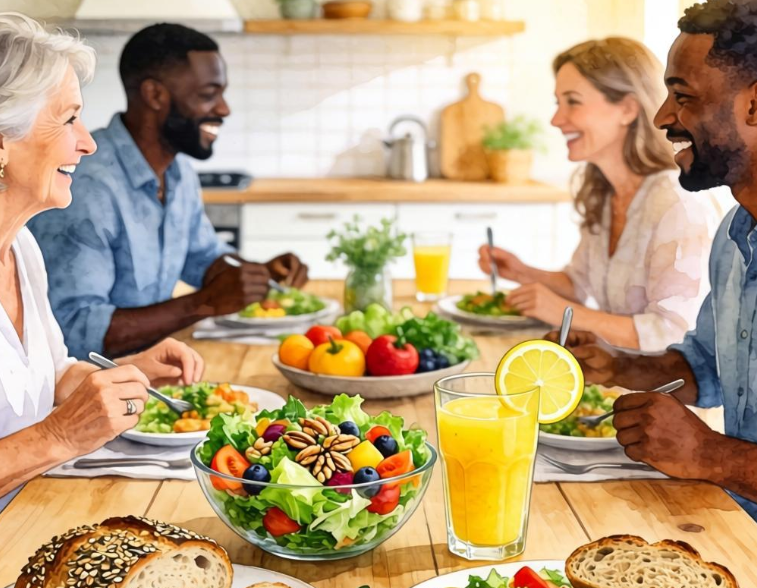
Last week, I accompanied the 78-year-old Aunt Zhang downstairs to the community for the annual review of the senior-age allowance. She clutched a cloth bag and complained to me all the way. She said that in the past two years, to apply for this certification, she had to go to the community hospital to draw two tubes of blood and take a chest X-ray, and it took a long time to get the report. This year, she even carried a thermos cup before going out. After queuing up, the community staff took her to sit at the convenience desk for ten minutes. They asked her whether she could buy and cook her own food and whether she had any chronic diseases. They measured her blood pressure and blood oxygen, then swiped her face on a tablet and that was it. They also gave her a discount coupon for a senior citizen canteen.
What Aunt Zhang didn't know was that what she went through this time was a health certification for welfare qualifications, which was completely different from the service matching certification that Uncle Wang next door had done before applying for a public nursing home last week. The latter is more complicated, requiring a professional appraiser to come to the home to conduct a comprehensive assessment of the elderly person's cognitive ability, mobility, and basic medical conditions. The final determination of the level of care services that the nursing home should provide Uncle Wang, and even whether the bed should be equipped with guardrails and whether auxiliary tableware should be used for meals, all depend on the results of this certification.
There has actually been a lot of controversy over the elderly health certification in the past two years. Most researchers in the field of public administration believe that this mechanism is indispensable. Last year, an investigation of the civil affairs system of a prefecture-level city in the south found that 317 deceased elderly people had their families conceal their information and received elderly subsidies for up to three years, causing a cumulative loss of more than 900,000 yuan to the public finances. Without regular health inspections, such loopholes will only get bigger and bigger. However, front-line elderly care service practitioners generally feel that certification in many places has long gone astray and has become a lazy policy of "certification for certification's sake" - I previously helped in a street elderly care office for three months, and I encountered a neighborhood committee staff member who, in order to save trouble, required an 87-year-old disabled elderly person to Grandpa Li took a wheelchair and ran for half an hour to the community to have his face scanned. The family members mentioned that the elderly man had a hospitalization physical examination report for the past two months but refused to acknowledge it. They said that "the system requires that data must be collected on site." In the end, I followed the staff to come to the elderly man's home to get the certification. The family members held my hand and thanked him for a long time.
To be honest, there is currently no unified standard for elderly health certification in China. All regions are trying to cross the river by feeling the stones, and there are quite a few reliable models that have been tried out. Many districts and counties in Zhejiang have tied health certification to annual free physical examinations for the elderly. When the elderly go for the physical examination, they get the certification, and small gifts such as eggs and soap are given out on site. Many elderly people originally thought the physical examination was troublesome, but now they take the initiative to ask the community when it will start. The "sensorless authentication" pilot program for disabled elderly people in Shanghai is more convenient. Eligible elderly people are given a bracelet with positioning and health monitoring functions. As long as the background can receive normal heart rate and step data, or the family members have uploaded the elderly's daily videos on the elderly care service applet, the system will automatically authenticate them, without the elderly or family members having to go through any formalities. Our street promoted a similar idea last year, integrating medical insurance medical records, community visit records, and facial recognition data for pension receipts. 70% of the elderly who have any valid records within half a year will automatically pass the certification. The remaining 30% are those who have been away from the local area for a long time, or have no health-related data for half a year, so they will call their families to verify, and only those who cannot be contacted will come to the door. No complaints from the elderly were received throughout last year.
Not long ago, I met a 92-year-old man whose children were working out of town. The old community they lived in did not have an elevator. The staff responsible for certification did not know how to check big data before. They insisted on asking his children to send a certificate from Shenzhen with the official seal of the company, proving that "the old man is alive and in good health and meets the requirements for subsidy receipt." In fact, do you think this is difficult? It's not difficult at all, it just depends on whether you are willing to do something more convenient for the elderly.
Many elderly people get confused when they hear the word "certification". They think they have to go to the window, fill out forms, and issue all kinds of weird certificates. In fact, this is not the case. The original intention of the elderly health certification has never been to "stuck" the welfare of the elderly. It is to give the money and services that should be given to those who really need it. If all places could think more from the perspective of the elderly when doing certification, be less perfunctory about "the system requirements are like this", and be more considerate like giving Aunt Zhang a canteen coupon, how could there be so many contradictions?
Disclaimer:
1. This article is sourced from the Internet. All content represents the author's personal views only and does not reflect the stance of this website. The author shall be solely responsible for the content.
2. Part of the content on this website is compiled from the Internet. This website shall not be liable for any civil disputes, administrative penalties, or other losses arising from improper reprinting or citation.
3. If there is any infringing content or inappropriate material, please contact us to remove it immediately. Contact us at:
