
Weight management diet plan design
There is no universal weight management diet plan that is suitable for everyone. The core of a truly long-term effective plan is to "create a sustainable 300-500 calorie deficit based on your existing eating habits while ensuring sufficient nutrient density." All plans that require you to completely overturn your original diet structure and endure long-term hunger are essentially short-term IQ taxes.
In the five years I have been doing nutrition consulting, I have come into contact with no less than 300 users who want to control their weight. The one who impressed me the most was a young Internet operation girl I came to last year. She copied the popular "Lose 10 pounds in two weeks" menu from Xiaohongshu and ate boiled chicken breasts every day. Meat and broccoli, I couldn't even see the oil star. I really lost 7 pounds after carrying it for 18 days. As a result, I stayed up for three nights in time to catch up with the project launch, and ate four late-night barbecue meals. I gained 9 pounds in a week, and my stomach was damaged. I went to the hospital to be diagnosed with chronic gastritis.
When many people make a diet plan, they always think about "being healthy" and "being standard", completely ignoring their own pace of life and taste preferences, and turning the plan into an ascetic discipline. Whenever something unexpected happens, they will break their defenses and eat in revenge. There are actually many popular dietary ideas on the market now, and each has its own applicable scenarios. There is really no need to rely on any one as the Bible.
For example, the low-carbohydrate diet, which is very popular now, and even the more extreme ketogenic diet, have indeed been proven by studies to be effective in short-term weight control for people with insulin resistance and abdominal obesity. I tried it for two months before to test the effect. The scales fell off quickly in the first two weeks, but later I obviously felt that my endurance decreased during exercise, and my eyesight went black when I squatted. My aunt postponed it for ten days, and then slowly recovered after stopping. Nowadays, academic circles generally believe that ordinary people can adhere to this model for up to 3 months. Long-term use will increase the risk of cardiovascular disease, so there is no need to endure it.
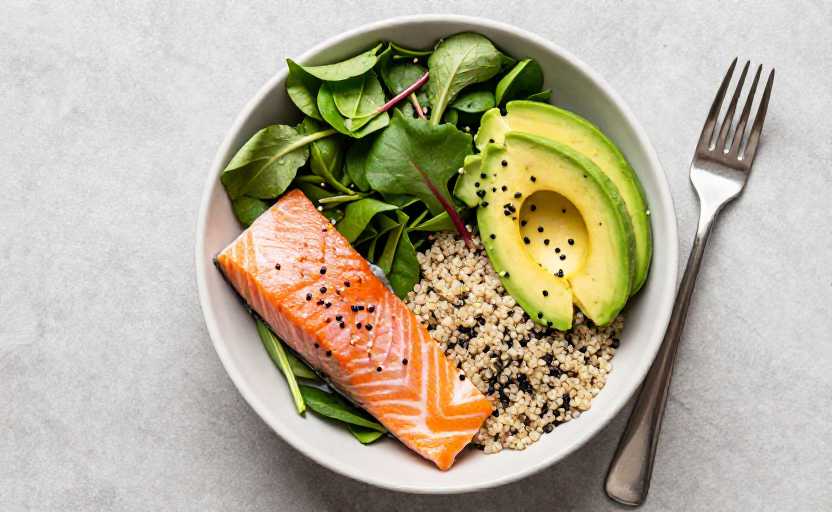
There is also the Mediterranean diet, which is recommended by the WHO. It contains more whole grains, more deep-sea fish, more fresh fruits and vegetables, uses olive oil instead of ordinary cooking oil, and consumes very little saturated fat. Long-term eating can not only control weight, but also reduce the risk of chronic diseases. It is not an exaggeration to say that it is currently the healthiest dietary pattern. But I have a customer in Chongqing who asked her to replace the red oil hotpot with olive oil for vegetables. After two days of eating, she came to me crying and said that her mouth was about to fade away and she would rather be fat than suffer this. No matter how good this plan is, what's the use if she can't stick to it?
The same goes for the 16+8 light fast, which is particularly popular among office workers in recent years. It compresses the eating time into 8 hours and leaves 16 hours of fasting. A friend of mine who is a programmer uses it very well. He loves to sleep in and never eats breakfast. He eats the first meal at 11 o'clock every day and the last meal at 7 p.m. He just fits into the 16+8 window, and he has lost 12 pounds in half a year without special dietary restrictions. But what if you ask a mother who has to get up at 6 o'clock in the morning to send her children off and go to work at 8 o'clock every day? After sending her children off and doing a lot of errands, she felt hungry and flustered as soon as she arrived at 9 o'clock. She had already lost the energy to work until 11 o'clock, and might have fainted due to hypoglycemia. This plan was completely inapplicable to her.
After talking about so many different ideas, some people may ask, how do I find the one that suits me? In fact, it doesn’t have to be that complicated at all. Just change your current eating habits first, without having to reinvent the wheel. The first thing you have to do is not to buy some chicken breast and oatmeal. First, take a memo on your phone and record everything you normally eat for three days. Don’t count the calories, just record it as it is: In the morning, you ate two meat buns and a cup of soy milk. After you finish memorizing it, you will know that the reason why you are fat is not that you eat too much, but that you eat too many "empty calorie" foods.
You don’t have to throw it all away when making changes, just change a few small places: for the two meat buns in the morning, you can replace it with one meat bun and one corn; for the braised chicken at noon, you can ask the boss to add less rice and more vegetables; in the afternoon, you can replace the full-sugar milk tea with three-thirds of sugar or no sugar, add a small tomato; for the braised pork in the evening, you can eat two less pieces, and replace a bowl of rice with a half bowl. Look, it didn’t make you hungry at all? Didn’t he tell you not to eat anything you like at all? By just making this change, you can reduce your intake of 300 to 400 calories a day, and in a month you will steadily lose 3-4 pounds, which is all pure fat and will not rebound at all.
Oh, by the way, the controversy over calorie counting is quite fierce now. One group says that every meal must be weighed accurately to the gram, otherwise the gap cannot be controlled. The other group says that intuitive eating should be practiced and only eating until 70% full is enough. Calorie counting will actually cause eating anxiety. My own experience is that a novice can weigh food for about a week in the early stage. He roughly knows how many calories are in a bowl of rice, how many calories are in a piece of chicken that is as big as the palm of your hand, and you just have to have a score in mind. There is no need to use a scale every time you eat. Last time a customer went out to eat with me, and he took out a food scale to weigh the dishes. The waiters next to him were dumbfounded. There is really no need for Taishe to die.
There is another pitfall that many people have stepped on. They think that in order to control their weight, they have to completely abstain from "junk food" such as snacks, milk tea, and hot pot. This is really not the case. I regularly go out for a hot pot meal with my friends every Friday. After eating, I eat a little lighter the next day and walk two more steps. I won't gain weight at all. On the contrary, because of this "expectation value", I don't always think about sneaking in and ordering milk tea when I go to work. On the contrary, it is easier to persevere. If you really give up all these things, one day you can't help but break your guard, and you will eat more out of revenge, which is not worth the gain.
To be honest, weight management is really not something that requires your willpower. I have seen too many people initially ambitious to lose 30 pounds in three months, but then gave up in half a month. On the contrary, the aunt who just replaced half a bowl of rice at night with steamed pumpkin every day, quietly lost 18 pounds in half a year, and is still maintaining it well. She usually eats her favorite osmanthus cake, and there is no rebound. To put it bluntly, the diet plan you design must first be something that you can eat for a lifetime, and secondly, it must be something that can help you lose weight. Otherwise, even if you lose weight in the short term, you will rebound one day, so why bother with that?
Disclaimer:
1. This article is sourced from the Internet. All content represents the author's personal views only and does not reflect the stance of this website. The author shall be solely responsible for the content.
2. Part of the content on this website is compiled from the Internet. This website shall not be liable for any civil disputes, administrative penalties, or other losses arising from improper reprinting or citation.
3. If there is any infringing content or inappropriate material, please contact us to remove it immediately. Contact us at:
