
balanced diet chart
There has never been a standardized balanced diet table that is suitable for everyone in the world. All ready-made diet templates are just for reference. You have to combine your physical condition, eating habits, and lifestyle adjustments to ensure that you are comfortable eating, have normal physical examination indicators, and are energetic every day. This is the optimal balanced diet table for you.
The first misunderstanding that many people make when they first come into contact with a balanced diet is to search for the "most scientific official version" and eat according to the number of calories, but instead eat problems. A while ago, I came across the "Perfect Diet Checklist" posted by a fitness blogger. In the morning, I had a bowl of oatmeal with chia seeds and 10 blueberries. At noon, I had brown rice with boiled chicken breast and broccoli. In the evening, I only had boiled vegetables. My friend who works as a construction site supervisor saw that it was healthy and followed it for half a month. My aunt put it off for a week. She was so hungry every day that she checked the food delivery app and had insomnia until three o'clock. I forgot to mention that he has to carry 20 kilograms of testing equipment to three construction sites every day. That amount of heat cannot even be used for basic consumption, and no matter how "standard" a watch is, it is useless.
The public dietary guidelines we often refer to as the Dietary Pagoda for Chinese Residents, the DASH Diet, and the Mediterranean Diet are essentially average reference values for the public, not mandatory standard answers. For example, the guideline recommends drinking 300ml of milk every day. If you are lactose intolerant and get diarrhea after drinking it, you can completely replace it with the same amount of sugar-free soy milk or low-lactose yogurt. There will be no difference in calcium and protein intake. ; It is recommended to eat 250-400g of cereals and potatoes every day. If you want to run a half marathon that day, there is nothing wrong with eating two more white steamed buns. If you have been lying down all day without going out, there is nothing wrong with eating less than half a bowl of rice.
Nowadays, the mainstream dietary concepts have different emphasis, and there is no need to ignore them all. The Mediterranean diet emphasizes eating more deep-sea fish, olive oil, and whole grains, which is indeed friendly to people with underlying cardiovascular diseases. However, if you live inland, fresh deep-sea fish is expensive and difficult to buy. It is perfectly fine to eat ordinary freshwater fish and cook with rapeseed oil every day. There is no need to force-fine "authentic" ingredients. Our ancestors said that "five grains are for nourishment, five livestock are for benefit, five vegetables are for supplement, and five fruits are for help". In fact, it is completely consistent with the core logic of modern nutrition, which emphasizes a variety of foods and no partiality. As for the controversial ketogenic diet, it is currently recognized by the medical community as being applicable only to children with refractory epilepsy and some severely obese people who follow medical advice. Ordinary people should not try it blindly. There is a high probability of hair loss, menstrual disorders, and elevated uric acid. The gain outweighs the loss.
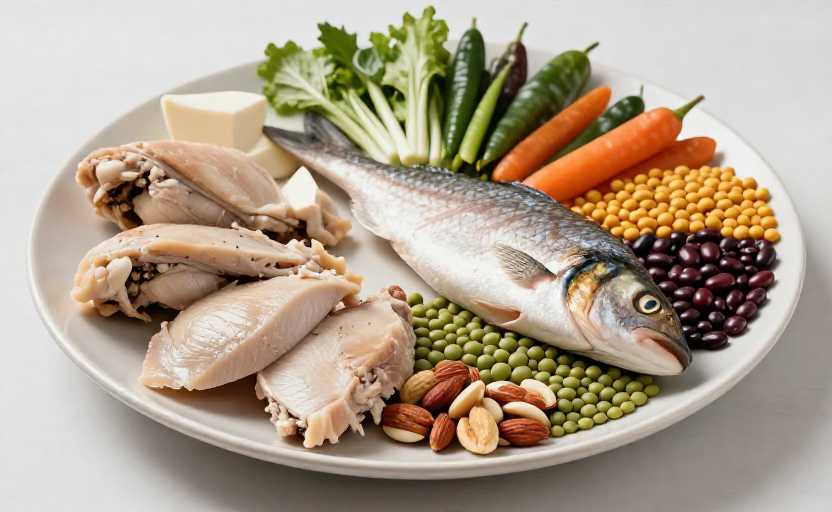
If you really want a practical reference, you don’t need to memorize so many numbers, just remember the plate rule. When you usually eat, roughly divide the plate you use into three pieces. One half is filled with dark vegetables such as dark green and deep purple (oh yes, potatoes, yams, and lotus roots that are rich in starch are considered staple foods, not vegetables). One quarter is filled with your favorite protein, such as eggs, beef, fish, shrimp, and tofu. The remaining quarter is filled with grains, potatoes, or ordinary white rice and noodles. You don’t have to force yourself to eat brown rice that you can’t swallow. Mix some chopped corn with white rice and steam two pieces of sweet potatoes as the staple food. The effect is the same. If you are a heavy physical worker or want to gain muscle, the proportion of protein can be adjusted upward. If you are in the early stage of sugar consumption, the amount of staple food should be slightly reduced. Just adjust flexibly and don't stick to the proportion.
Really don’t embarrass yourself. In order to achieve the so-called "balance", I ate boiled broccoli for half a month. After eating it, I felt nauseated when I saw the green color, so I tried two butter hot pot meals. Instead, I gained three pounds. It was completely outweighed by the gain. If you don't like broccoli, replace it with cabbage, kale, spinach, or even eat a couple more bites of mushrooms. Your dietary fiber and vitamin intake won't be much different, so why bother with yourself?
There are still many people who are confused about whether to give up sugar and whether to take supplements. In fact, there is no standard answer. It’s not that you can’t touch any added sugar. It’s okay to drink a cup of milk tea or eat a piece of birthday cake once in a while, as long as you don’t drink milk tea like water every day. Supplements are provided on demand. If you can get enough nutrition from normal meals, you don’t need to take them at all, unless you are deficient in physical examination. People who often stay up late may be deficient in B complex. Those on a vegan diet should remember to supplement B12, and pregnant women should supplement folic acid. These all depend on individual circumstances. You don’t have to follow what others buy.
My mother used to be obsessed with finding the "most correct diet chart". She would use the kitchen scale to make meals every time. She was so tired that she always said she was unhappy with her meals. Later, I told her that as long as you add half a spoon less salt when cooking, eat two more bites of green vegetables every day, and don’t just eat pickles with white porridge every day, that would be better than anything else. She now eats according to her own habits. She drinks a bowl of soy milk and a steamed bun in the morning, stir-fries two vegetables at noon, and occasionally cooks some multigrain porridge at night. Her blood pressure is very stable, and she feels much better than before when she counted grams every day.
To put it bluntly, a balanced diet is never a math problem. There is no need to calculate the intake based on grams, and there is no need to follow other people's templates. If you can stick to it for a long time, eat comfortably, and have no physical problems, it is the best balanced diet plan for you.
Disclaimer:
1. This article is sourced from the Internet. All content represents the author's personal views only and does not reflect the stance of this website. The author shall be solely responsible for the content.
2. Part of the content on this website is compiled from the Internet. This website shall not be liable for any civil disputes, administrative penalties, or other losses arising from improper reprinting or citation.
3. If there is any infringing content or inappropriate material, please contact us to remove it immediately. Contact us at:
