
sleep health education
There is no one-size-fits-all sleep standard. All sleep requirements that are divorced from individual circadian rhythms and life scenarios are essentially anxiety-mongering that goes against common sense. The core of sleep health is never a hard target of getting 7-8 hours and falling asleep at 11 o'clock, but the dual standards of sleep quality and work and rest stability.
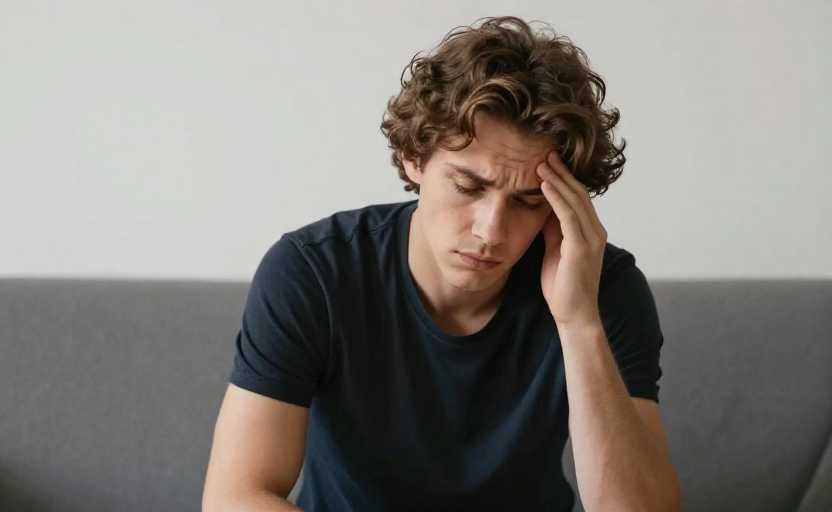
Last month, when I was doing a free sleep science clinic in the community, I met a young girl who works in Internet operations. She said that in order to maintain her health, she set an alarm clock for 10:30 and forced herself to go to bed. She lay there until after 1 a.m. and counted sheep with her eyes open. On the contrary, she was even less energetic than before when she stayed up until 12 o'clock and went to bed again. The physical examination also found that cortisol was high.
At present, the academic circles have been arguing about sleep standards. The Traditional Sleep Medicine Association prefers a schedule that conforms to the circadian rhythm, that is, adjusting the sleep cycle according to the sunrise and sunset. It is recommended that adults fall asleep between 22:00 and 23:00 and sleep for 7-8 hours. Long, there is indeed solid research support behind it - the human body's pineal gland usually starts to secrete melatonin around 21 o'clock, and 2-3 o'clock in the morning is the peak period of deep sleep. Disrupting this rhythm for a long time will indeed increase the risk of metabolic disorders and cardiovascular diseases. However, chronobiology research in recent years has come up with a completely different conclusion: about 20% of the population are born "nocturnal people". The length of the PER3 gene determines that their biological clocks are 2-3 hours later than ordinary people. Forcing them to fall asleep before 11 o'clock will cause sleep phase advancement disorder, which is equivalent to forcibly moving their biological clock forward by 3 hours, which is no different from the damage caused by international jet lag.
Many people's anxiety about sleep actually regards sleep as a KPI that must be completed. Just like the more you force yourself to "stop thinking about pink elephants", your mind will be full of pink elephants. Lying in bed and repeatedly swiping the sleep APP to see how long you sleep and what proportion of deep sleep you have, it will keep your nerves excited and make it more difficult to enter deep sleep. I once met a retired Aunt Zhang who only slept for more than 5 hours a day. Her children were always worried that she would harm her body if she slept too little, so they asked her to do a sleep monitoring. The results showed that her N3 stage deep sleep accounted for 26%, which is much higher than many young people who sleep for 8 hours and only have 10% of deep sleep. She usually dances square dances and takes care of her grandchildren. She is more energetic than anyone else. There is no need to force herself to lie down for two or three more hours.
As for the "Da Vinci Sleep Method" and "Polyphasic Sleep" that are very popular on the Internet, when we popularize science, we usually remind you that there is currently no long-term large-sample study to prove that this method is harmless to ordinary people. Only less than 1% of born short sleepers with DEC2 gene mutations can only sleep 4-5 hours a day and still maintain energy. Ordinary people learn this method forcefully, and they will suffer from reduced attention and irritable mood within half a month. It is completely worth the loss. There are also many people hoarding melatonin and sleep gummies, which are actually only suitable for temporary jet lag or occasional adjustment of work and rest. Long-term use of large doses will inhibit the secretion of melatonin and disrupt the normal biological clock.
If you really want to adjust your sleep, it doesn’t have to be that complicated. For example, if you are an office worker who works a nine-to-five job, if you have an intermediate rhythm, try to fix the time to fall asleep around 23:00. Don't watch short videos one hour before going to bed. Turn on the night mode on your mobile phone. If you really can't sleep, do a body scan while lying down, starting from your toes, and feel the muscles relax little by little. Don't always think about "Why am I not asleep yet?" Lying down and relaxing is rest in itself, but it is easy to fall asleep unknowingly. If you are a medical nurse or an online ride-hailing driver who needs to work shifts, you don’t have to force yourself to sleep at night. Change the blackout curtains in your bedroom to completely opaque ones, wear soundproof earplugs, and sleep for 6-7 hours during the day every day. Regularly, the damage to your body will be much less than if you sleep at night today and sleep during the day tomorrow.
In fact, after doing sleep science for five or six years, my deepest feeling is that sleep is an instinct shared by humans and animals. Just like you eat when you are hungry and drink when you are thirsty, there should not be so many restrictions. Sleep health education has never been about teaching you how to be a "good sleep student" and imposing uniform standards to add anxiety to yourself. It is about helping you understand your body signals and find a routine that suits you. When you wake up every day, you feel refreshed. That is the best sleep state, isn't it?
Disclaimer:
1. This article is sourced from the Internet. All content represents the author's personal views only and does not reflect the stance of this website. The author shall be solely responsible for the content.
2. Part of the content on this website is compiled from the Internet. This website shall not be liable for any civil disputes, administrative penalties, or other losses arising from improper reprinting or citation.
3. If there is any infringing content or inappropriate material, please contact us to remove it immediately. Contact us at:
