
Female fitness motivation
The current core motivations for women’s fitness have long been separated from the single “thin” aesthetic, and have been divided into four categories: health needs, emotional value acquisition, identity construction, and independent aesthetic expression. The weight of motivations of women of different ages and life backgrounds varies greatly, and there is no so-called “unified correct motivation.”
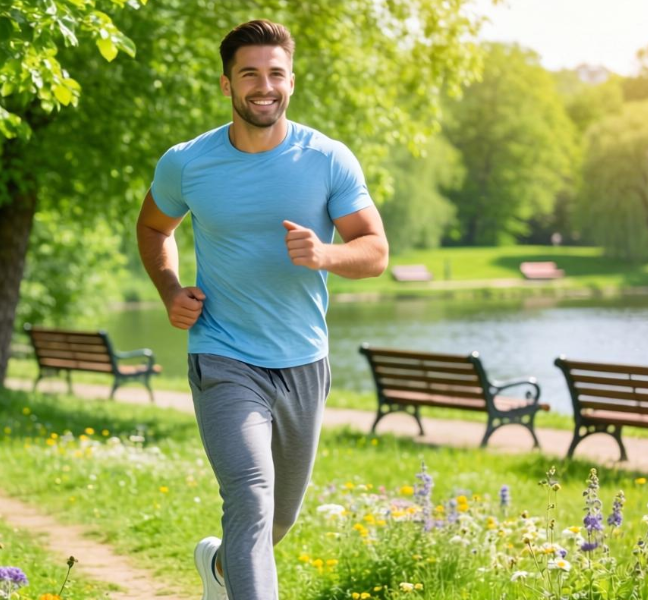
Seriously, if you ask any girl who frequents the gym, eight out of ten of her motivations are not "beautiful to show off to others." A while ago, I accompanied my 32-year-old best friend in operations to get a physical examination report. She had been suffering from migraines for half a year, and her low-density lipoprotein was two levels higher than normal. The doctor issued an ultimatum: "If you don't exercise, you will have to take medication to control it." So she reluctantly signed up for a private training class downstairs, doing resistance training three times a week plus one aerobic session. After almost a year, she has not had migraines for half a year, and all the indicators on the review last month returned to the normal range. A large sample survey in the field of sports medicine has also confirmed that the primary trigger for women over 30 years old to start fitness is health warning. Whether it is cervical pain, poor sleep or a red light in physical examination, this type of fitness driven by solid body feedback often leads to the highest persistence. Of course, many people diss this motivation as "too utilitarian" and feel that fitness should be a love from the heart. But when it really hurts that you have to sit still for three hours, there is nothing wrong with being "utilitarian".
Downstairs of an office building where people work until nine o'clock, they can often be seen carrying gym bags and walking to the venue without taking off their makeup, just to catch the last 45-minute spinning class. I met a recently divorced sister in a boxing gym. She hit the sandbag for an hour every day for three months. She said that it was more effective than three psychological consultations. "The sandbag won't quarrel with you. It will bounce back as hard as you exert it. After sweating all over, I will go home and lie on the bed with the pillow on it. I almost forget what my ex-husband looks like." The field of psychology has long confirmed that moderate-intensity exercise can promote the secretion of endorphins and serotonin, and effectively relieve anxiety and depression. But if you ask ordinary fitness girls, they will not be able to say such professional words. They will only tell you, "After practicing, you will feel so good that you will forget all your worries." This kind of emotion-driven fitness now accounts for an increasing proportion. After all, life is not easy for contemporary people. It is cost-effective to find an emotional outlet that does not cost much and has no side effects.
There are also many people who go there for social interaction and a sense of identity. Half of the group class classrooms in university towns are filled with girls who have arranged to take classes together. After class, they take a group photo of a few people sweating and post it on WeChat. They don’t have a flattering figure, so they just write a copy saying “I’m alive again today”. Girls who play CrossFit get together and compete to see who can lift the heavier deadlift and who can complete a standard muscle-up first. The feeling of unlocking a new achievement is stronger than getting an A at work. Of course, this kind of motivation is often criticized. Some people say, "Practice for ten minutes and take photos for half an hour is not real fitness at all." But if you think about it from another perspective, having companions and positive feedback are the core factors that can improve persistence. People spend their own money to buy their own happiness, even if it is just to join the circle, it doesn't bother anyone.
As for aesthetic needs, it is no longer the single standard of "slim down to 80 pounds and wear size S". There is a girl born after 2000 in the gym I often go to. She specially hires a personal trainer to train her arm muscles so that her arms will have obvious lines when she wears a sling in the summer. "You don't have to raise your arms all the time to hide your flesh. I think muscular arms are 10,000 times better looking than thin arms." Of course, this topic is quite controversial now. There is a group of feminists who believe that "even if you are doing fitness for good looks, you are being kidnapped by men." But most girls don't accept this idea at all - "I look at myself in the mirror and look happy. It's none of other people's business." To put it bluntly, aesthetics is a very personal matter. As long as you don't diet or exercise excessively to cater to other people's requirements, it's your own choice to have the kind of body you want.
I have been working out on my own for almost five years, and my motivation has changed eight hundred times. At first, I wanted to lose 90 pounds for wedding photos in my graduation year. Later, I ran a half marathon and wanted to challenge a marathon. Now my goal is more realistic: I can carry my 20-pound fat cat up to the sixth floor without gasping for breath, and I can go on a trip and walk for a day without my legs getting sore. Many of my friends around me are similar. Some started out to lose weight, but later fell in love with the sense of accomplishment of lifting irons; some became amateur yoga teachers to cure insomnia.
Is there any "should" motive? As long as it doesn't hurt your body and makes you willing to put down the potato chips on the sofa and stand up and move for half an hour, it's a good motivation.
Disclaimer:
1. This article is sourced from the Internet. All content represents the author's personal views only and does not reflect the stance of this website. The author shall be solely responsible for the content.
2. Part of the content on this website is compiled from the Internet. This website shall not be liable for any civil disputes, administrative penalties, or other losses arising from improper reprinting or citation.
3. If there is any infringing content or inappropriate material, please contact us to remove it immediately. Contact us at:
