
Summary of basic first aid skills popularization training content
There is no need to master a complete set of professional first aid procedures. As long as you can skillfully use the core operations of three types of high-frequency scenarios, you can cover more than 80% of daily emergency first aid needs. And when facing first aid scenarios, the priority of "dare to take action" is much higher than "100% operation standard".
Maybe the first reaction of many people when they see this is "I'm not a doctor, what if I make a mistake and take responsibility?" ”, this is also the most frequently asked question at every training site. Just last year, the Civil Code clarified the exemption clause for well-intentioned rescuers. We should first cover everyone's concerns and then talk about the specific content.
First, let’s talk about the airway foreign body obstruction that we most likely encounter in our daily lives. At the last training site, a mother of two children said that her child’s throat got stuck after eating a mango. She froze in place and her hands were shaking so much that she couldn’t even hold the child. It wasn’t until a neighbor came over to pat her on the back that she coughed out the core. Thinking about it afterwards, her back was covered in cold sweat. Regarding the handling of this scene, different first aid guidelines currently have different emphases: The American Heart Association's guidelines clearly require that infants under 1 year old cannot use the Heimlich maneuver with abdominal thrusts, and that 5 back slaps + 5 chest compressions should be used alternately. Children and adults over 1 year old should use the Heimlich maneuver. ; The experience of many front-line pre-hospital emergency personnel in China is that as long as the patient can still cough on his own and make sounds, priority should be given to encouraging him to cough out the foreign object on his own. Blindly patting the back or striking with his hands may make the foreign object get stuck deeper.
Let’s talk about cardiopulmonary resuscitation, which everyone has heard about most but dare not practice. Last year, there was a 62-year-old uncle Zhang in our community. He had a heart attack and fell down in front of a convenience store while walking in the morning. The convenience store owner just received our training last month. He knelt down and pressed the button without thinking much. After pressing the button for almost 12 minutes, the ambulance arrived. He was finally rescued, and a subsequent review showed no sequelae. The biggest concern that many people are afraid to use is "what to do if the ribs are broken." To be honest, according to the 5-6cm pressing depth required by the guide, there is about a 30% probability of breaking the ribs of the elderly, but compared with saving a life, the price is completely worth it. There is also a controversial point here: the latest international guidelines require non-professional rescuers that if they are unwilling to perform artificial respiration, they can achieve a good rescue effect by simply performing continuous chest compressions without forcing themselves to make mouth-to-mouth contact. ; However, the training of many domestic emergency centers still recommends that if protection is provided (such as using breathable gauze or clothing) and artificial respiration, the effect will be better. You can make your own choice based on the on-site conditions.
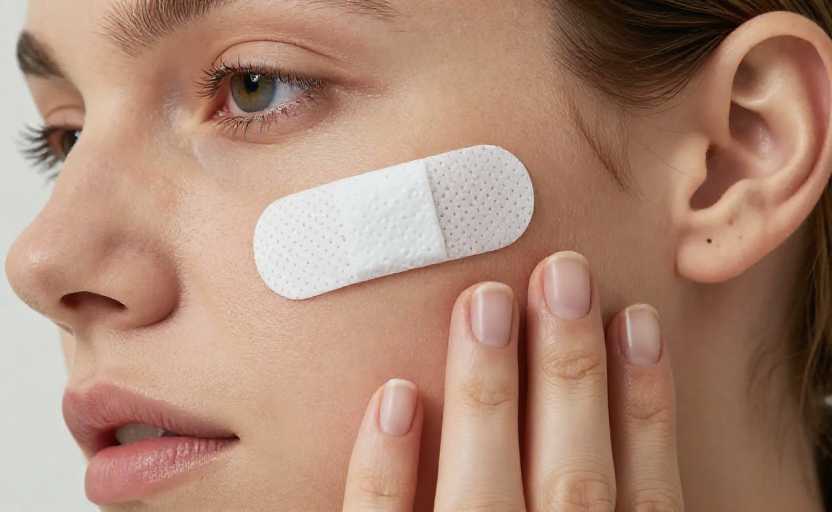
As for the cuts and falls that are the most common bleeding in daily life, there is no need to remember too many complicated operations. Small bleeding can be stopped by pressing clean gauze or towel on the wound for three to five minutes. There is no need to lift the arm or tie the proximal heart. On the contrary, if the wrong tie is made, it can easily cause limb ischemia. If you encounter heavy bleeding in the limbs, you must remember the time of binding when using the tourniquet. When you arrive at the hospital, tell the doctor as soon as possible and don't loosen it casually. Oh yes, there are also many people asking about the treatment of burns and scalds. You should really stop putting toothpaste, soy sauce, aloe vera gel and other messy things on the wound. There was a young man who splashed his hand when frying chili oil, and his grandma applied half a tube of toothpaste. When he arrived at the hospital, When the doctor cleaned up the toothpaste that had been stuck on the wound, it rubbed off a large area of the damaged epidermis. The pain made him shed tears. There was only one correct operation: just rinse it with running cold water for 15 to 20 minutes. After rinsing, go directly to the hospital and don't apply anything else.
I have been doing public first aid science for almost 6 years, and I have seen too many people remember everything correctly when they learn it. But when something happens, their mind goes blank. In fact, there is no need to force yourself to memorize all the steps. If something happens, call 120 as soon as possible. The dispatcher on the phone will teach you step by step what to do, and you can just follow it. It is much more reliable than recalling the steps by yourself.
This training did not give everyone thick handouts, nor did it arrange a closed-book exam. The core purpose is to let everyone get rid of the "professional filter" of first aid. It is not something that only medical staff can do, but also the role that ordinary people can provide to those around them in the ten minutes before the ambulance arrives. Of course, it would be safer if you can find a simulator to practice the compression strength and Heimlich gesture a few more times after you finish learning.
Disclaimer:
1. This article is sourced from the Internet. All content represents the author's personal views only and does not reflect the stance of this website. The author shall be solely responsible for the content.
2. Part of the content on this website is compiled from the Internet. This website shall not be liable for any civil disputes, administrative penalties, or other losses arising from improper reprinting or citation.
3. If there is any infringing content or inappropriate material, please contact us to remove it immediately. Contact us at:
